
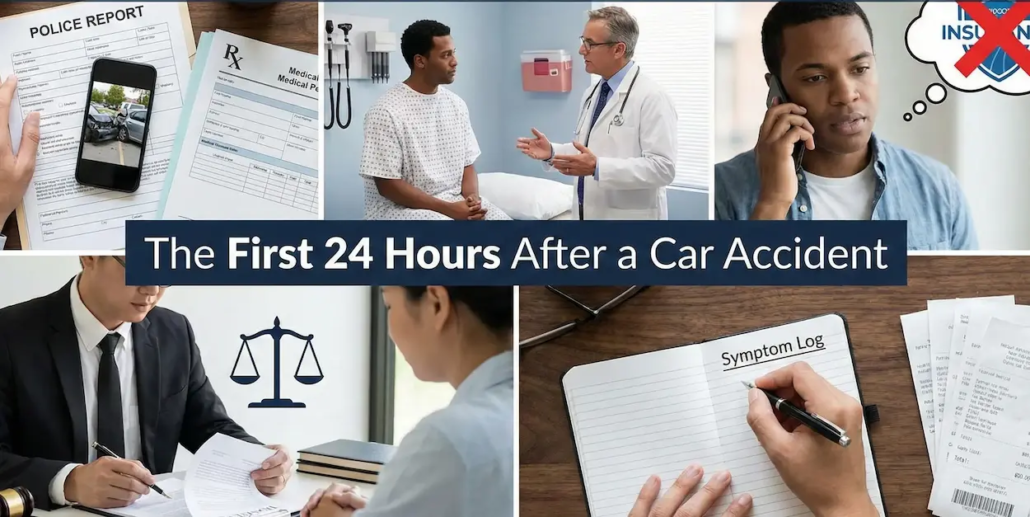
What to Do in the First 24 Hours After a Car Accident in Florida
Being involved in a car accident is stressful, and once the immediate danger has passed, the next 24 hours are critical, especially if you’re considering a personal injury claim. How you handle that first day can affect your ability to recover damages for medical bills, lost wages, and even court.
1. Gather and Organize All Documentation
Even after the police report is filed, it’s important to collect everything, and we mean everything, related to the accident.
- Make sure you have a copy of the police report. Check it for accuracy; errors in vehicle information, names, or descriptions of the accident can impact your claim.
- Keep any photos of your vehicle, the accident scene, and visible injuries.
- Save medical records or treatment notes if you got care at the hospital or urgent care.
- Record repair estimates, towing receipts, and car rental costs if applicable.
It’s important to keep a detailed record now to make it easier to prove the damages later and ensure your personal injury case is well-supported. This is where attorneys get most of their information to support your case.
2. Seek Prompt Medical Evaluation
Now, this one is more important than you may think. Even if you feel fine, it’s important to get a medical evaluation within 24 hours of the crash. Some injuries, like whiplash, internal bleeding, or concussions, may not be immediately apparent and can worsen quickly if left untreated. Medical records created shortly after the accident are also critical in establishing a timeline for your injuries and linking them to the crash.
Another important thing to note is that Florida personal injury law requires proof that injuries were caused by the accident; early documentation strengthens your case.
3. Avoid Talking to the Other Driver’s Insurance Company Alone
It’s typical for insurance companies to contact drivers within hours of the accident, but it’s good to know that absolutely anything you say can impact your claim.
- Provide only basic facts: date, time, and location.
- Never admit fault or speculate about what happened; even saying “I think it was my fault” can be used against you.
- Consider contacting a personal injury attorney before giving a recorded statement. An attorney can communicate with insurers on your behalf and ensure your rights are protected, not twisted around.
4. Review and Protect Your Legal Rights
After an accident, your first priority should be health and repairs, but it’s also important to think legally.
In Florida, if you’re partly at fault for the accident, your payout could be reduced. Keeping detailed records right after the crash helps protect your claim.
You also have to act quickly. In most cases, you have four years from the accident to file a personal injury lawsuit. Waiting too long could mean you lose your right to seek compensation.
Finally, don’t sign anything from the insurance company without talking to a lawyer first. Quick settlement offers might seem easy, but they’re often much lower than what you could actually be entitled to.
5. Keep a Personal Log of Symptoms and Expenses
Maintaining a daily log in the first 24 hours and beyond can be incredibly helpful:
- Note any pain, discomfort, or new symptoms.
- Track appointments, medications, and out-of-pocket expenses.
This log can be used as evidence of ongoing injury or hardship if a personal injury claim is pursued.
Going Forward
The first 24 hours after a car accident set the stage for protecting your legal rights. Gathering information, seeking immediate medical attention (even if you feel ok), avoiding solo communication with insurers, and keeping detailed records can all strengthen a personal injury claim.
Remember, insurance companies act in their own interest, not yours. Talking to a personal injury lawyer early on ensures you have someone on your side to help you from weakening your case and that your medical costs, lost wages, and damages are properly pursued.